
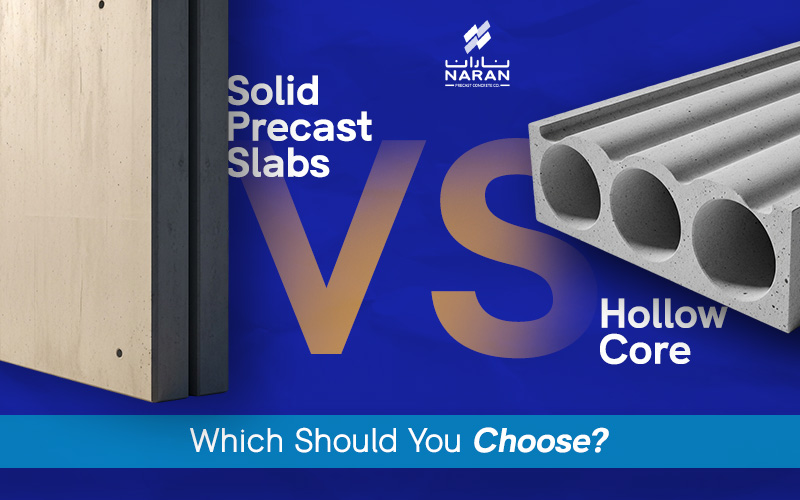
Most modern construction projects utilize precast concrete slabs as they offer benefits like quicker installation along with structural reliability. However there are two basic types of these slabs, i.e., solid precast slabs and hollow core slabs.
The decision between solid core vs hollow core concrete slabs significantly impacts the overall performance of modern construction projects in terms of timelines and budget.
Solid and hollow core concrete elements offer different structural advantages. This is why you need to understand the key differences between the two to decide properly.
This blog looks into these two precast concrete slab types in detail. So stay with us till the end to know which of these precast concretes is right for your project.
Key Takeaways
- Solid precast slabs refer to heavy two-way spanning elements that suit high load-bearing applications or projects with irregular layouts.
- Hollow core slabs come with internal voids. This makes them lighter but structurally efficient.
- A hollow core slab leads to faster installation and cost reduction.
- Solid precast slabs provide customization flexibility as they can accommodate complex shapes and architectural details.
- Hollow core slabs save money in lengthy but repetitive projects such as residential buildings or parking structures.
- Solid precast slabs work best in industrial floors and heavy-load structures where continuity in concrete elements is paramount.
- You need to consider specific project needs like span length and load demands, to make your decision between these two options. Other factors like design freedom and construction speed also play a key role in making this decision.
A Quick Comparison Between Solid Precast Slabs vs Hollow Core
| Solid Precast Concrete Slabs | Hollow Core Precast Concrete Slabs |
| These are solid reinforced concrete slabs with no empty spaces. | These slabs feature hollow voids that run longitudinally through the entire element. |
| These consist of precast and reinforced concrete. | These are made with prestressed concrete. |
| These are heavier. | The internal voids make these less heavy. |
| These come with a high load-bearing capacity. | The load-bearing capacity of these slabs is lower than solid core slabs. |
| These are perfect for moderate spans of about 5-8 meters. | These work best for longer spans of up to 12 meters as well. |
| These take longer for installation due to the high weight. | The installation is quicker due to less weight and an efficient design. |
| These offer superior acoustics. | The acoustics are moderate with these slabs. |
| These work best for heavy-load buildings, industrial floors, and parking spaces. | These work best in residential buildings, hotels, and offices. |
This is what you will find in this blog.
- What Are Solid Precast Slabs?
- What Are Hollow Core Precast Slabs?
- Solid Precast Slabs vs Hollow Core: What Sets These Apart
- Which Option is Right For You?
What Are Solid Precast Slabs?
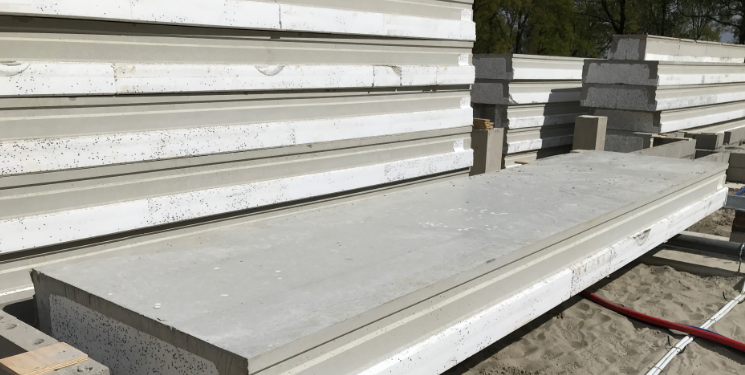
Solid precast slabs refer to dense and fully solid concrete panels that come with steel reinforcement. These slabs undergo construction in controlled factory environments. You can customize these in terms of thickness or finishes based on specific project needs.
Solid precast slabs are two-way structural elements that possess the capacity to distribute loads in multiple directions.
The continuous mass of these slabs gives you exceptional fire resistance along with a high compressive strength. These slabs find applications in high-load-bearing walls as well as building foundations.
What Are Hollow Core Precast Slabs?
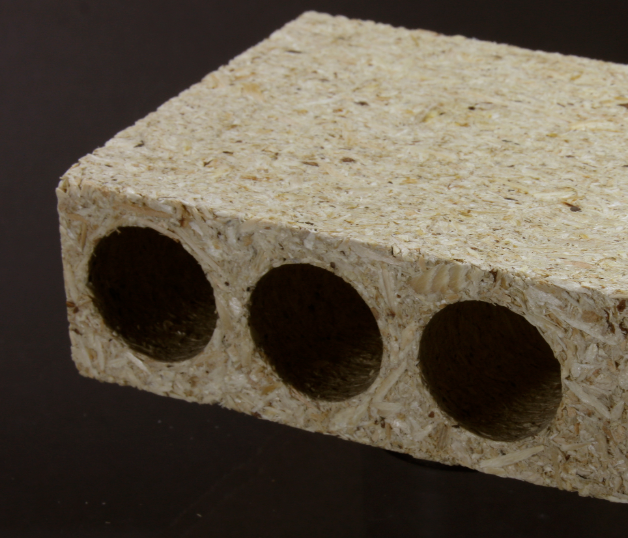
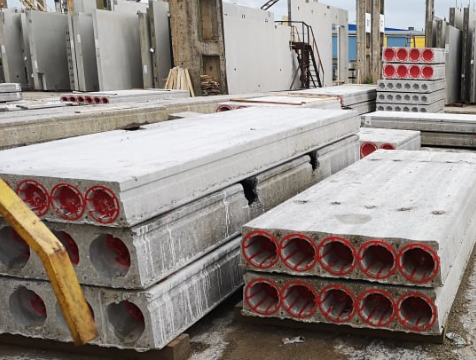
Hollow core precast slabs come with continuous voids that run through their entire length. The voids reduce the weight of these elements with no effect on the structural integrity. Estimates suggest that hollow core slabs weigh about 50% less than the same size precast slabs.
These prestressed precast concrete elements behave primarily as one-way spanning elements. These slabs come in standard sizes, which leads to greater efficiency and repetition success.
These slabs come with pretensioned steel strands, which provide the tensile strength needed to achieve long spans. This makes hollow core a lightweight yet high-performing solution for most building construction processes.
Solid Precast Slabs vs Hollow Core: What Sets These Apart
There are many things that set a precast solid concrete slab apart from a precast hollow core concrete slab. This section lists a few of them to give you a general idea.
- Load Distribution
Both the hollow core and solid core concrete systems carry loads differently. In solid precast slabs, the weight distribution takes place in two directions. This makes them ideal for irregular column grids and cantilevers. Areas with concentrated loads can also use these elements for this very reason.
Hollow core precast concrete slabs span in one direction only. These rely on beams or load-bearing walls for support and that makes them highly efficient for long, straight spans. This however limits their usability in projects with complex layouts.
- Spanning Extent
Hollow core slabs can span long distances, often 10 to 18 meters. They do that without intermediate supports, which results from their prestressing.
Solid precast slabs tend to span shorter distances in applications that need structural continuity. This makes hollow core slabs a go-to choice for large open spaces such as parking structures or offices.
- Weight Considerations
The solid cross-section design makes solid precast slabs very heavy. This is also what drives their use in building foundations and columns.
Hollow core slabs weigh about 30–50% less than solid core slabs of the same size. This effectively reduces material costs in foundations and supporting structures.
The internal voids of these concrete elements make them lighter. This reduces transportation costs and requires smaller installation equipment. Solid core slabs are heavy, and they need more robust rigging and substructure support in comparison.
- Functionality
The built-in voids of hollow core concrete slabs permit the placement of electrical conduits as well as small plumbing runs in them. These voids also create ventilation, which reduces the need to create additional service zones.
With solid precast slabs, you need to invest in embedded conduits or surface-mounted services, which make the installation tricky.
- Cost
For projects that are large and repetitive, hollow core slabs are generally more cost-effective. These slabs reduce material use and ensure faster production.
Solid precast slabs come at a higher upfront cost as their construction requires more raw material. The demand for high load-bearing capacity also requires the use of more concrete, which further drives up the costs of these slabs.
- Customization Freedom
Solid precast slabs give you sufficient customization freedom. The openings and recesses are easy to incorporate into these slabs. You can also add edge details or irregular shapes to this concrete during fabrication, which further increases the design flexibility.
Hollow core slabs come in standard shapes that you use in repetitive structures. These slabs do not allow for on-site modifications, which makes them ineffective for complex architectural designs.
Which Option is Right for You?
Now that you know what sets solid precast concrete slabs and hollow core slabs apart, let’s go ahead and discuss the main question. Which of these two options is right for your precast construction project?
You can go with solid precast slabs if your project demands high load capacity. Projects that need irregular shapes or architectural elements also require these slabs. If your project needs greater acoustics and fire resistance, you need to pick solid-core concrete slabs.
On the other hand, if your project spans long distances and requires fewer supports, the hollow core slabs are your best bet. These slabs work best in areas like parking lots or school-like buildings where structures are repetitive.
Visit us at Naran Precast Concrete Co. today to get the premium quality precast concrete structural elements and building solutions for all applications.
FAQs
Is solid core or hollow core concrete slab better for construction?
Lightweight applications where you need to finish the job quickly hollow core slabs work best. And where durability and fire resistance are paramount you can go with solid core slabs.
What makes solid core and hollow core slabs so different?
Solid core slabs are precast concrete elements with no voids. Hollow core slabs contain longitudinal voids that make them more functional.
What disadvantages make hollow core less effective?
These slabs are lightweight, which limits their application in physically demanding conditions. The installation and repairs of these slabs also require special tools.
Do experts recommend hollow core concrete slabs for residential applications?
Hollow core concrete slabs work best for residential construction due to their lightweight construction. These slabs also offer greater functionality due to the empty voids that you can use to house water or electrical connections.
What makes precast concrete slabs an excellent construction material?
High strength to weight ratio and weather resistance make precast concrete slabs a perfect material in modern construction.