
In almost every construction project, the choice of stairs is among the most important things you come across. Stairs hold significant importance for your building’s overall design consistency or safety.
Two common stair options in construction projects include timber stairs and precast concrete stairs. Both of these stairs offer different levels of construction speeds as well as overall project safety.
Timber stairs were a more popular option in the past for their cost-effectiveness. However, the drawbacks of these stairs far outweigh their benefits. Most modern projects use precast concrete stairs as they offer greater durability, time saving, and safety for the laborers as well as the residents.
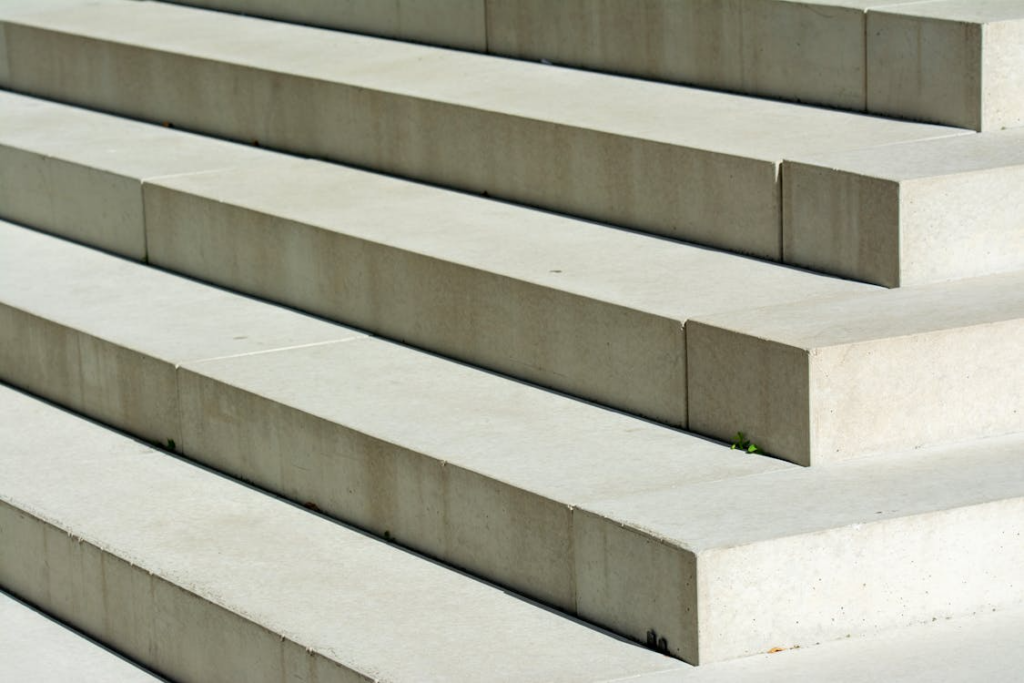
This blog explores what makes precast concrete stairs superior to timber stairs in modern construction. So, keep on reading till the end.
- Reasons Why Timber Stairs Are Ineffective
- Key Features of Precast Concrete Stairs
- What Makes Precast Stairs Safer and Faster to Install
Reasons Why Timber Stairs Are Ineffective
Timber stairs come with significant drawbacks in modern building construction projects. This section lists some notable ones to give you a general idea.
- Since timber is a combustible material, it can quickly catch fire, which leads to structural failure.
- Over time, timber stairs become structurally weak, which leads to creaking, loose fixings, and joint movements.
- Timber stairs warp or rot with water exposure.
- These stairs are vulnerable to termites, ants, borers, and other pest attacks.
- On-site preparation and ongoing adjustments make the installation of these stairs very slow.
- These stairs need regular painting and pest treatments. This makes them high maintenance.
- The installation of these stairs requires you to use temporary or unsafe ladders for several days in a row. This increases the risks of falls. The on-site cutting of these stairs also increases safety risks.
Key Features of Precast Concrete Stairs
Precast concrete stairs are an innovative construction choice. The off-site preparation of these stairs in a controlled factory environment makes them a safer and quicker option.
Manufacturers use reinforced concrete to cast the stairs in factories. Then they cure them in optimal conditions to achieve maximum structural strength and consistency. Finally, they transport these chairs to the construction site and install them either as a single unit or in modular sections.
Here are some key features that set these precast concrete products apart.
- With this approach, you can prepare the site as well as the stairs at the same time, which leads to a quicker installation. Research shows that the use of precast elements like stairs reduces the construction timelines by up to 40 %.
- These chairs come with fewer labor as well as maintenance costs.
- You can design these stairs in a variety of textures, colors, shapes, and sizes to match your aesthetic or structural needs.
- These stairs offer superior weather, moisture, thermal, impact, and chemical resistance.
- These stairs are compatible with both interior as well as exterior spaces.
- Precast concrete stairs offer greater structural stability due to their uniform finishes.
- The precast concrete structural elements are recyclable, which makes these stairs eco-friendly.
What Makes Precast Stairs Safer and Faster to Install
The following are a few points that show why precast stairs are a better option in modern construction projects in terms of safety and installation timelines.
1. Off-Site Manufacturing
One thing that makes these stairs a better option is that they allow you to save a bunch of time. Manufacturers prepare these stairs off-site. This allows on-site workers to finish other construction activities without any worry. The precast concrete cuts construction time in half, according to some estimates.
Off-site preparation reduces construction tasks on the actual site. This leads to less noise or waste that can disrupt construction operations.
The parallel workflow significantly reduces the construction timelines. On the other hand, you have to make timber stairs on-site. This increases the risks of bad weather or material availability delays. The site preparation in case of timber stairs also takes up more time, which makes this a less effective option.
2. Resistant to Fire and Wear and Tear
Precast concrete stairs offer superior fire as well as wear and tear resistance. The non-combustible nature of this material makes it fire-safe. Timber stairs, on the other hand, are highly flammable, which compromises your safety.
Concrete stairs can easily resist the wear and tear that regular foot traffic causes. These stairs can bear heavy loads without cracking, which is not something that timber stairs guarantee.
3. Weather and Moisture Resistance
These stairs work best in areas with extreme weather conditions. They have the ability to withstand heavy rain and freezing temperatures. These stairs can also handle scorching heat or an extremely damp indoor atmosphere. This allows these stairs to maintain their structural integrity at all times, which enhances safety.
4. Rapid On-Site Installation
The installation of precast concrete stairs is very rapid. The whole process takes only a few hours since there is no need for extensive formwork or cutting. You only need a crane to place the stairs on the site, and you can immediately start using them.
With timber stairs, you have to spend so much time on measurements, cutting, and assembly, which makes them less effective.
Research also reveals a total cost reduction of 15 – 25 % over cast-in-place concrete stairs, which results from savings in labor, formwork, and maintenance over the project’s lifecycle.
5. Immediate Load-Bearing Capability
Another benefit of these stairs is that they arrive at the construction site in a fully cured and ready-for-use state. Precast stairs have the capacity to support loads immediately after you install them. This allows workers to safely access different levels of the building immediately, which saves time without creating safety concerns.
Timber stairs need temporary supports and ongoing adjustments. You also need to protect them during construction, which slows down the workflow.
6. Slip Resistance
Precast concrete stairs feature non-slip finishes that provide a secure footing. This significantly reduces the risks of falls.
According to Wikipedia, the number of reportable construction accidents reduces by up to 80% when you use precast elements for construction.
The integration of anti-slip finishes or textures guarantees consistent step heights, which prevents trip hazards. With the timber stairs, factors like warping or inconsistent dimensions reduce the surface friction. This creates several safety hazards for residents of all ages.
7. Structural Strength and Stability
The steel-reinforced precast concretes have exceptional structural strength. These stairs can do very well against heavy loads and vibrations. These stairs are not prone to flexing or creaking over time like timber stairs often do.
These stairs retain their structural integrity for decades with minimal upkeep. Precast concrete stairs are built to precise standards that guarantee their structural integrity for years to come.
The solid or uniform surfaces of these stairs eliminate the risks of sagging, cracking, or collapse. This makes them a much safer option than weaker timber-based stairs.
Conclusion
Timber material makes sufficiently good stairs; however, it lacks the safety or installation speed that most modern construction projects require. With precast concrete, you get both of these benefits along with added strength as well as durability.
Precast concrete stairs offer fire resistance, structural reliability, and quicker installation, which you do not get with timber stairs. These features make these a better option in residential, commercial, or industrial construction projects where faster project completion and safety are always the top priority.
Visit us at Naran Precast Concrete Co. today to get the best precast building solutions that offer greater durability, safety, and cost savings in every type of construction project.
FAQs
What makes concrete stairs superior to timber stairs?
Precast concrete stairs are generally more durable. These stairs can withstand moisture and fire. These stairs can also bear heavy foot traffic or sunlight exposure. Finally, the installation of these stairs takes up very little time.
What benefits make precast concrete stairs a better choice?
These stairs are quicker to install. The off-site construction increases productivity and reduces safety concerns. These stairs also have a much longer service life due to their greater weather and impact resistance.
Which material is safe for stairs?
Concrete offers greater safety than most stair materials. It is fire and moisture-resistant. The installation of these stairs is also a lot safer, as most of the construction is done off-site.
What makes timber stairs a bad choice?
Timber stairs can catch fire. These stairs also absorb moisture and become weaker with time. These stairs are also prone to pest infestation. The maintenance cost of timber stairs is also very high.
How long do concrete stairs last?
Most concrete stairs can last 15 to 20 years with minimal care or upkeep.