
Every heavy modern infrastructure project needs robust structural components that promise greater durability and construction efficiency. A reliable structural component can ensure our bridges, highways, metro systems, and large industrial facilities are always structurally sound and safe.
Precast concrete beams are a popular choice in modern heavy infrastructure projects. These precast elements deliver the best performance due to their greater structural strength.
One key parameter of precast concrete beams is their load-bearing capacity. This directly affects their usability and the overall quality. A deeper knowledge of this parameter is crucial in heavy infrastructure projects where loads are significant and safety requirements are strict.
This blog looks into the load-bearing capacities of precast concrete beams that we use for heavy infrastructure applications in detail. So, keep on reading till the end.
- What are Precast Concrete Beams?
- Understanding the Load Bearing Capacity of Precast Concrete Beams
- Typical Load Bearing Capacities of Different Precast Concrete Beams
- Factors That Affect the Load Bearing Capacity of Precast Concrete Beams
What are Precast Concrete Beams?
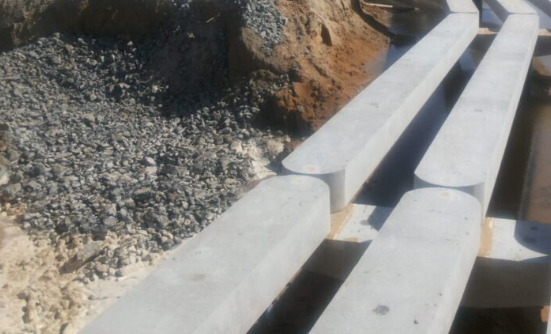
Precast concrete beams are structural components that can withstand vertical loads such as floors, roofs, or walls without bending or breaking. These beams are prepared in factory-controlled environments that are away from the actual construction site. Manufacturers use molds along with prestressed or reinforced concrete to create these sturdy components.
According to a study, precast concrete columns or beams represented about 36.62% of the total precast concrete market share in 2025, which makes them the largest product category in this sector.
Unlike traditional concrete beams, precast beams offer better quality control as well as construction efficiency. Precast beams also give you greater structural strength along with significant cost savings.
The following are some common types of precast concrete beams that modern heavy infrastructure projects employ.
- Prestressed concrete beams
- Reinforced concrete beams
- I-beams
- U-girders
- T-beams
- Box beams
Applications of Precast Beams in Heavy Infrastructure
The following are some common heavy infrastructure applications that use these precast concrete products.
- Bridges and Flyovers
- Railway bridges
- Elevated roadways
- Metro and Rail Systems
- Large U-girders and box beams support elevated metro tracks.
- Industrial Facilities use these for large-span roofs or crane-support structures.
- Multi-level parking garages
Understanding the Load Bearing Capacity of Precast Concrete Beams
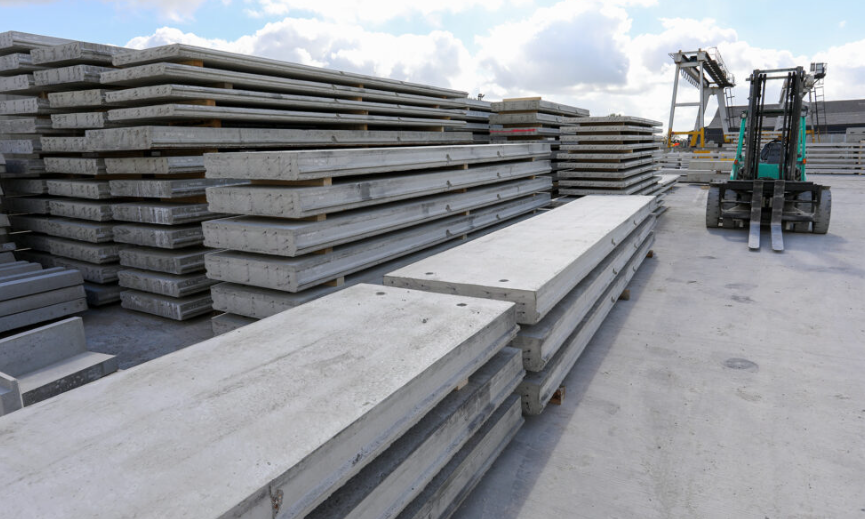
The load-bearing capacity of a beam is a measure of the maximum amount of weight that it can bear without experiencing excessive deformation or complete structural breakdown.
The following are some common types of loads that precast beams encounter in heavy infrastructure applications.
Dead Loads: These are permanent loads that the structure exerts on itself. These weights include the self-weight of the beam, pavements, deck slabs, etc.
Live Loads: These are movable or temporary loads that precast beams have to face. Live loads include vehicular traffic on bridges, equipment loads in industrial facilities, pedestrian loads, etc.
Environmental Loads: These are loads or stresses that arise from the environmental effects. These may include wind loads, seismic loads, temperature stresses, etc.
Impact and Dynamic Loads: These loads come from sudden impacts or other dynamic forces in the vicinity of the beams. These include railway loads, machinery vibration, shock loading, etc.
Typical Load-Bearing Capacities of Different Precast Concrete Beams
According to some recent experimental studies, the load-bearing capacities of precast concrete beams can range from 60 kN to over 1000 kN. The exact number depends on the size of the beam, reinforcement, and the extent of prestressing.
With most medium structural beams, you get a load capacity of 100–200 kN. Larger prestressed beams or girders can even withstand loads that are even greater than 1 MN or 1000 kN.
Research also shows precast beams with Ultra-High-Performance Concrete (UHPC) connections have approximately 6.3% higher flexural strength compared with traditional beams that you cast in place.
The following are some common precast concrete beams along with their capacities.
| Beam Type | Load Capacity |
| Precast reinforced concrete beams | 59.56–168.78 kN |
| Precast prestressed concrete girder | Up to 1450 kN |
| Precast composite beams under bending | 206.8 kN |
| Precast concrete slab-beam systems | 22.95–29.13 |
| Small precast slab-beam elements | 20–30 kN |
| Medium reinforced precast beams | 60–170 kN |
| Composite or prestressed beams | 200–700 kN+ |
| Large prestressed bridge girders | >1000 kN |
| Double-Tee | 400–800 kN |
| Pre-stressed I-Girder | 800–2000 kN |
| Box Beam | 1000–2500 kN |
| Metro U-Girder | 2000–4000+ kN |
Factors That Affect the Load-Bearing Capacity of Precast Concrete Beams
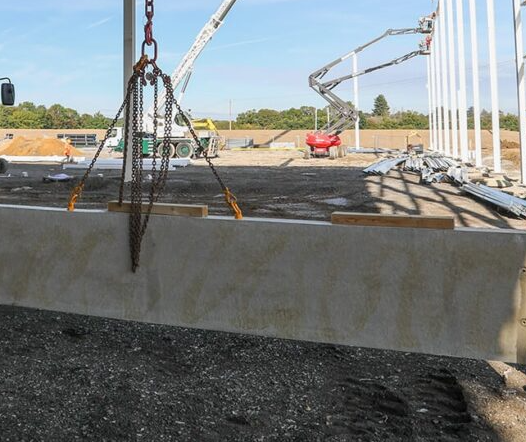
There are several factors that affect the load-bearing capacity of precast concretes beams that we utilize in heavy infrastructure applications. The following section lists some major ones.
1. Concrete Strength
The compressive strength of the concrete beam affects its load-bearing capacity to a great deal. For heavy infrastructure uses, precast beams with 40 MPa to 80 MPa strengths are the top choice.
These beams lead to greater compressive resistance, which enhances durability.
2. Reinforcement and Prestressing
The extent of reinforcement or prestressing also affects the load-bearing capacity of these beams. Reinforcement results in better resistance of the beam against tensile stress. For reinforcement, manufacturers place steel bars inside the concrete to resist tensile forces.
Another approach is prestressing, where you tension steel tendons before or after concrete casting. This creates compressive stress, which counteracts tensile forces when you place a load on the beam.
3. Beam Geometry
The load-bearing capacity of concrete beams also depends on the shape or dimensions of these structures. Several parameters, like the depth, width, or cross-sectional area of the beam, affect how much load it can withstand. Usually, beams that are deeper tend to possess greater bending resistance.
4. Span Length
The length of the precast concrete structural elements is another key parameter that determines the load capacity of a precast beam. Larger beams are more prone to bending or deflection.
Here are the common spans for different types of precast concrete beams.
- Precast I-Beams have a span of about 20 – 40 meters.
- Box Beams have a span of 25 – 50 meters.
- U-Girders have a span of 30 – 60 meters.
If your application requires the use of longer spans, you can use prestressing to enhance the structural strength of these elements.
Conclusion
Precast concrete beams are a critical component in heavy infrastructure projects. An understanding of the load-bearing capacities of these elements allows engineers or manufacturers to design safer and more reliable infrastructure development projects like metro systems, highways, industrial facilities, and bridges, to name just a few.
The load-bearing capacities of these beams depend on factors like the span length, geometry, reinforcement, and the concrete strength. So, take all these variables into account every time you need to order quality precast concrete beams that meet the specific load-bearing needs of your project.
Visit us at Naran Precast Concrete Co. today to order our reliable tie beams and a wide range of other structural elements for all types of residential and commercial construction projects to get the best value for your money.
FAQs
What do you mean by the load-bearing capacity of a precast concrete beam?
Load-bearing capacity refers to the capacity of the concrete beams to support axial or vertical loads without any damage to their structure.
How much weight can a 32 MPa precast concrete beam withstand?
A concrete with 32 MPa strength can easily bear approximately 4641.22 pounds per square inch without failing.
Why do you need to use precast beams over cast-in-place beams in heavy infrastructure applications?
Precast beams are far superior to cast-in-place beams as they offer better quality control as well as faster construction timelines. You also need to spend less on on-site labor, which further reduces costs. Finally, these beams give you a longer service life due to their exceptional structural strength.
How strong is a 50 MPa precast concrete beam?
The term MPa refers to the compressive strength of a concrete beam. A beam with 50 MPa means it is strong enough to handle a load of 50 megapascals or 50 million Newtons of force per square meter with ease.