
The UAE has a strong reputation for innovative infrastructure projects that combine engineering excellence with public safety. There are sprawling highways that connect you with different states, along with smart urban city landscapes that make your life easier.
One key infrastructure element in the region is its robust underground utility network. According to a report, the UAE features the highest global Fibre-to-the-Home (FTTH) penetration rates of about 99.3 to 99.5 %.
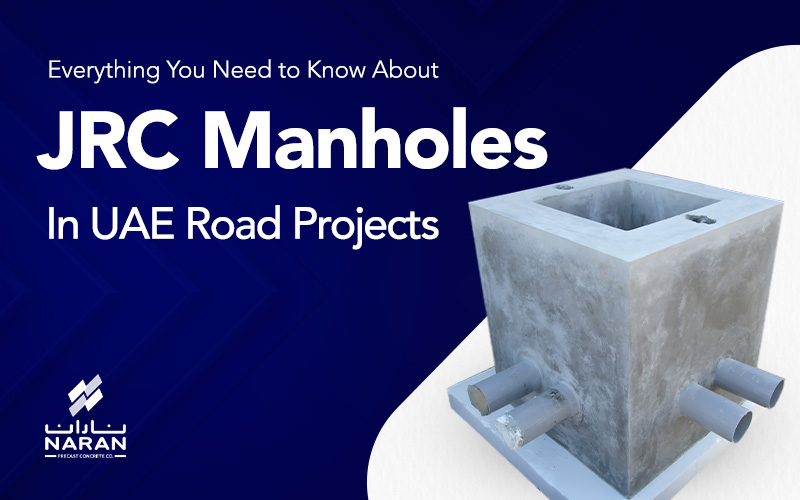
JRC manholes are key components of these extensive networks that people often overlook. JRC manholes are basically specialized chambers that host underground telecommunication systems to protect them from damage or unauthorized access.
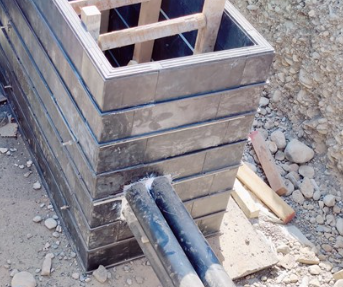
This blog looks into these precast concrete products in detail, highlighting what makes them a superior option for UAE road projects. So keep on reading to learn more.
- What are JRC Manholes?
- Types of JRC Manholes
- Benefits of JRC Manholes for the UAE Road Projects
- Applications of JRC Manholes
What are JRC Manholes?
A JRC or Joint Reinforced Concrete manhole refers to specialized manholes that are an integral part of modern sewerage, stormwater drainage, and especially utility networks. These manholes feature steel-reinforced concrete in their designs, which makes them extremely sturdy.
The design of these manholes meets strict safety standards. These manholes offer easy access to underground cables or telecommunication systems to facilitate better inspection, maintenance, and repairs.
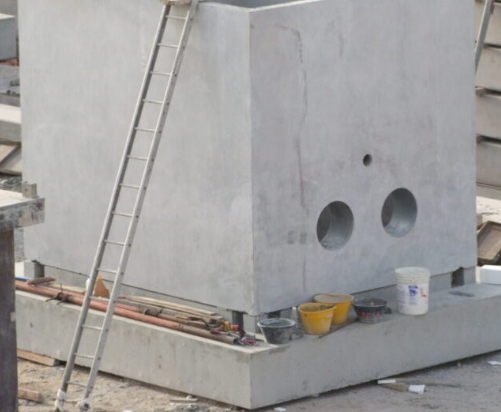
These manholes revolutionize the modern telecommunication systems as they provide you with assistance in accessing complex telecom and utility cables. They also facilitate cable jointing, rerouting, and splicing. These manholes make rerouting and scaling underground networks more efficient.
Key Features
- Unlike traditional drainage manholes, JRC manholes are built for the durability and safety of telecommunication and electrical duct networks in particular.
- These features include heavy-duty covers that can handle up to 40 tons of weight.
- These manholes have customizable internal layouts that allow you to accommodate additional items like ducts, cable trays, and jointing equipment with ease.
- These chambers have waterproofing designs that prevent both groundwater and rainwater ingress.
- JRC manholes have high heat resistance, which ensures longevity in the extreme UAE weather.
Types of JRC Manholes
You can find these manholes in JRC 4, JRC 14, and JRC 4 manhole types. Each of these types differs in terms of size and intended purpose. Here is a brief look at these main JRC manhole types.
1. JRC 4 Manhole Chambers
These are the smallest and most compact manhole chambers that are perfect for use cases when the cable entries are limited. The dimensions of these chambers are 915 × 445 × 750 mm. These chambers are ideal for shallow depth installations. The findings are applicable in residential or commercial telecom projects.
2. JRC 12 Manhole Chambers
These are medium-sized manholes with dimensions 1220 × 685 mm and about 160mm frame depth. These chambers combine both compactness and capacity. JRC 12 manholes find uses in commercial districts, main distribution routes, secondary telecom corridors, etc.
3. JRC 14 Manhole Chambers
These manholes are perfect for high cable traffic applications due to their wide dimensions of 1830 × 685 mm. Most future-ready infrastructures use these manholes due to their greater durability as well as the capacity to organize complex telecommunication networks.
These precast concrete manhole chambers mainly find applications in roadways or highway development projects.
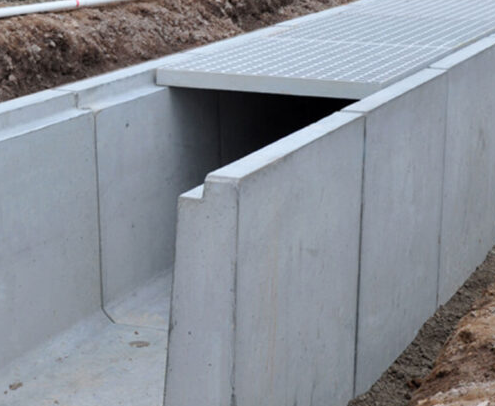
Benefits of JRC Manholes for the UAE Road Projects
The following are some notable benefits that make JRC manholes an excellent choice for modern road projects.
- Quicker Installation
You can prepare precast concrete JRC manholes off-site in factory settings. You can prepare the site and the manhole simultaneously, which reduces construction timelines.
- Greater Structural Durability
Precast concrete JRC manhole chambers possess a greater strength-to-weight ratio. These manholes can withstand heavy traffic, internal pressure, and consistent impacts. Their material also resists corrosion and chemical attacks. This makes them a reliable option in modern infrastructure projects that need more structural durability.
- Watertightness
A JRC manhole comes with fully jointed sections. The cover as well as the walls of these manholes have no gaps, which prevents water infiltration. This property of JRC manholes prevents electrical or telecommunication hazards.
- Enhanced Safety
A JRC manhole has exceptional strength. Its sealed design prevents accidental falls as well as unauthorized access. These manholes do not crack or warp easily, which ensures the safety of both the public and the key telecom systems.
- Cost-Effective
A precast JRC manhole reduces overall construction costs. It does so by eliminating on-site labor costs. Faster project timelines further translate into cost savings. JRC manholes can last for decades with minimum upkeep, which reduces both maintenance and replacement costs.
- Easy Maintenance
The design of a JRC manhole allows safe and easy access to utility networks. Professionals have ample room inside these manholes to conduct inspections and repairs.
These manholes feature standardized dimensions that allow you to replace the damaged parts quickly. Lastly, these manholes have built-in rungs or ladders to facilitate an easy entrance and exit.
- Versatility and Customization
JRC manholes give you complete design freedom in terms of manhole depth. These manholes accommodate various pipe diameters. They also feature multiple inlets and outlets. You can also design multiple sections inside these manholes to meet specific project requirements.
Applications of JRC Manholes
The following are some major applications of JRC manholes in urban development projects.
- Large-scale roads or highway projects use JRC manholes to ensure future-proof access for telecom systems.
- These facilitate traffic management by integrating with smart city systems.
- These are a part of sanitary sewer networks that we use for residential or commercial wastewater.
- These are integrated into flyovers or parking spaces to ensure the safety of underground utilities without affecting pavement structures.
- These serve as access chambers for electrical conduits or fibre-optic lines.
- Large infrastructure projects like airports, railways, and smart city developments also rely heavily on JRC manholes for junctions and control points.
Conclusion
JRC manholes serve as critical components in the UAE’s robust telecommunications network. These manholes guarantee the safety of underground utility systems. They also facilitate easy cable access to authorized personnel, which makes maintenance or upgrades a lot quicker.
The sturdiness of JRC manholes guarantees that the underground utilities do not suffer any damage from the environmental stressors or the heavy traffic load. These features make these manhole chambers indispensable for the longevity as well as the overall performance of modern UAE road projects and utility systems.
Visit us at Naran Precast Concrete Co. today to check out our top-grade concrete manhole chambers and manhole covers for all road infrastructure and industrial applications.
FAQs
What makes JRC manholes superior to regular manholes?
Unlike regular manholes that we employ in sewerage or drainage, a JRC manhole’s design specifically supports telecom or electrical duct networks. These manholes give you cable routing or jointing ease, along with a heavy load-bearing capacity which you do not get with regular manholes.
What are the three types of JRC manholes that most UAE road projects use?
Most UAE road projects use JRC 4, JRC 12, and JRC 14 manholes. The choice depends on the specific manhole application. For residential or urban roads, JRC 4 and JRC 12 manholes are perfect as they are available in small to medium sizes. For complex highway or backbone networks, larger JRC 14 manholes are the right choice.
What are the common materials that we use to make JRC manholes?
A typical JRC manhole consists of precast concrete. Some models come with ductile iron covers that can handle heavy traffic loads as well as weather impacts.
What are some common uses of JRC manholes?
These manholes find uses in telecom projects, electrical networks, and water pipelines.
Do JRC manholes support the future expansion of telecommunication networks?
These spacious manholes come with extra space where you can host additional ducts or cables. This allows for future expansion without any road excavation.