
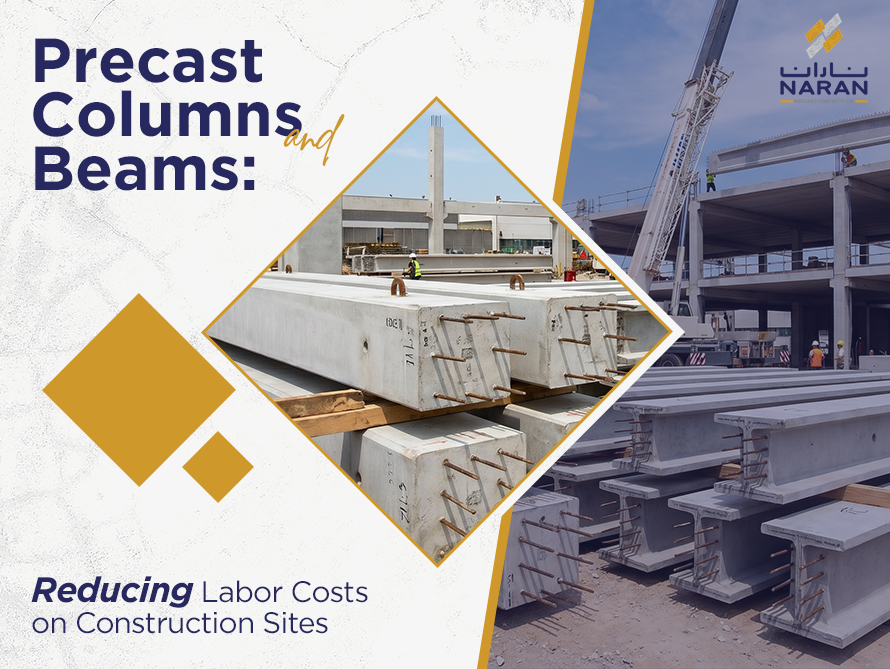
Faster project completion and cost-effectiveness are the biggest concerns in every construction project. Many large projects in cities like Dubai fail to do well due to high labor costs that result from skilled worker shortages and increasing project complexities.
This is especially the case when you use traditional methods like on-site concrete pouring to make structural elements like beams, columns, foundations, etc. One solution that proves extremely effective for labor cost savings is the use of precast concrete beams and columns.

These precast concrete products have transformed the way we plan and execute modern construction projects. This blog looks into how precast beams reduce labor dependency, enhance site efficiency, and contribute to considerable labor cost savings. So, let’s get right into it.
- What Are Precast Columns and Beams?
- The Labor Cost Challenge in Construction
- How Precast Beams and Columns Reduce Labor Costs

What Are Precast Columns and Beams?
Precast columns and beams are integral structural components that can bear vertical or horizontal loads in large-scale buildings. These components act like the skeleton of your building. What sets precast columns and beams apart is their off-site construction in factory-controlled settings.
These beams are poured, cured, and quality-checked off-site, which reduces on-site labor requirements. Traditional cast-in-place columns and beams involve sequential on-site processes, which lead to greater time and labor requirements. In a precast approach, factors like parallel construction, which involves simultaneous off-site fabrication and on-site work, reduce project duration significantly. This fundamental difference is what makes precast structural elements a more cost-effective option.
The Labor Cost Challenge in Construction
The labor cost challenges stem from several factors, such as a lack of productivity, the constant need for supervision, unexpected delays, process inefficiencies, etc. Here are some factors that increase labor costs in traditional construction.
- There is a need for more skilled laborers who can handle formwork, bar benders, or concrete mixing and pouring in construction sites.
- Repetitive manual construction processes take a lot of time and slow down progress, which leads to more costs.
- With on-site pouring, the risks of injuries or accidents increase. This also disrupts construction processes and increases labor costs.
- On-site concrete pouring is affected by weather conditions like rain, heat, and humidity. These factors not only produce construction delays but also lead to inconsistent quality.
These challenges enhance labor costs in construction sites significantly, and that is why precast concretes construction is a more economical option in projects where the budget as well as the project timeline is tight.
How Precast Beams and Columns Reduce Labor Costs
Here are some key points that highlight how precast columns and beams have the potential to minimize labor costs significantly.
1. Minimized On-Site Workforce
A 2024–2025 construction cost analysis report says there is labor cost savings of approximately 20–30% when using precast systems vs cast-in-place. With precast construction, there is no need for separate teams to create formworks, handle steel fixers, pour concrete, and supervise these processes. Most of these roles shift to a factory setting, which limits on-site work and thus the costs related to it.
You only need a few laborers on the site to position, erect, and connect already formed concrete beams or columns. This reduces labor headcount, which translates into considerable cost savings.
2. Faster Construction Time
In precast construction, columns or beams and their sites can be prepared at the same time. One Reddit user claims there is about a 30–50% reduction in construction time when you use precast concrete beams and columns. You do not need to allocate separate time to prepare the site, pour the concrete, and wait for it to cure.
All of these processes take place in parallel. On-site workers prepare the site while factories make the concrete elements at the same time. The concrete elements arrive at the site fully prepared. Laborers can quickly assemble multiple columns or beams, which allows them to construct multiple floors in very little time. This reduces the need for more workers or for overtime, which saves costs.

3. Reduced Skilled Labor Dependency
Precast construction of columns or beams eliminates the reliance on expensive on-site skilled laborers. You do not need experts for precise formwork alignment, reinforcement detailing, or surface finishing.
With precast construction, the formation of these elements takes place in carefully controlled and automated settings. This means contractors only need semi-skilled labor for the installation of these precast concrete structural elements on-site. This further cuts down costs while reducing hiring challenges at the same time.
4. Elimination of Formwork and Scaffolding
There is also no need to design, assemble, align, and then dismantle formwork or scaffolding for concrete pouring if you go with precast beams. These labor-intensive processes take up a lot of time, which adds more to the labor costs.
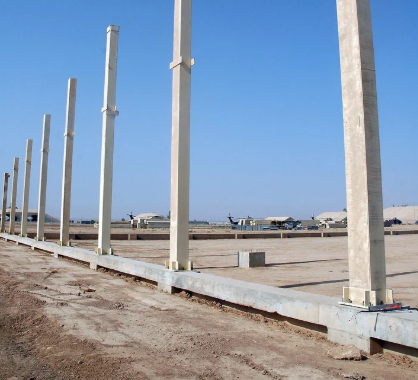
Labor can simply install these beams with cranes and other simple material handling solutions in a matter of a few hours. This is another way these columns and beams cut down costs.
5. Improved Productivity and Workflow Efficiency
A recent productivity study on off-site or precast construction shows there is about 30% improvement in labor productivity compared to traditional construction methods.
Precast concrete columns and beams enhance workplace efficiency as well. There are no risks of material shortages while making these concrete elements, as the whole process happens in factories. There is also no idle time waiting for the concrete to set or dry. Components arrive at the site in ready-to-use form, which leads to quicker installation.
Factory production of these components also results in consistent output rates, reduced downtime, and better resource utilization. All of these factors ensure the highest labor productivity.
6. Reduced Rework and Errors
Traditional on-site construction of concrete beams and columns is subject to poor or inconsistent workmanship, misalignment of formwork, incorrect reinforcement placement, and environmental factors.
This means you often have to demolish and reconstruct certain components, which creates project delays as well as the need for additional labor and material.
With the precast approach, each component is prepared with strict quality control. Manufacturers use standardized molds and conduct quality checks, which reduces the risks of rework and the need for additional labor hours. This is what results in fewer overall costs.
Conclusion
Precast concrete columns and beams are a more practical construction solution. These elements lower labor costs by reducing on-site labor requirements and improving efficiency. They also minimize errors and delays. This makes them a powerful solution to one of the construction industry’s biggest challenges, i.e., rapidly rising labor costs.
So, if your construction project has a tight budget but you do not want to compromise on the quality or durability of the concrete columns or beams, you need to consider precast construction of these components.
This practical and forward-thinking approach can save you a lot of money on labor costs during the entire lifecycle of the project.
Visit us at Naran Precast Concrete Co. today to get the best precast concrete columns, beams, walls, and other construction solutions to save both your construction time and labor costs significantly.
FAQs
What makes precast elements cost-effective?
These elements reduce labor costs on the site as they shift most of the concrete work to the factory settings. There is no need for labor-intensive processes like formwork, reinforcement placement, and curing at the site, which reduces worker headcount and hence the costs.
Do you need skilled on-site labor to erect precast columns and beams?
The on-site work in this case involves simple tasks like lifting, positioning, or connecting the beams. These tasks only need a semi-skilled crew.
Are precast structures superior to cast-in-place concrete in terms of strength?
Precast concrete structures often have greater strength as their preparation involves strict material mixing, pouring, and quality check standards. This results in consistent surfaces, higher strength, and exceptional durability.
Can you customize precast columns and beams?
You can customize these components to meet specific construction requirements in terms of load capacity, size, shape, and dimensions.
Is precast construction cost-effective for smaller construction projects?
Yes. This approach is effective for small-scale projects with tight budgets. It eliminates repetitive on-site concrete pouring and increases installation speed.