
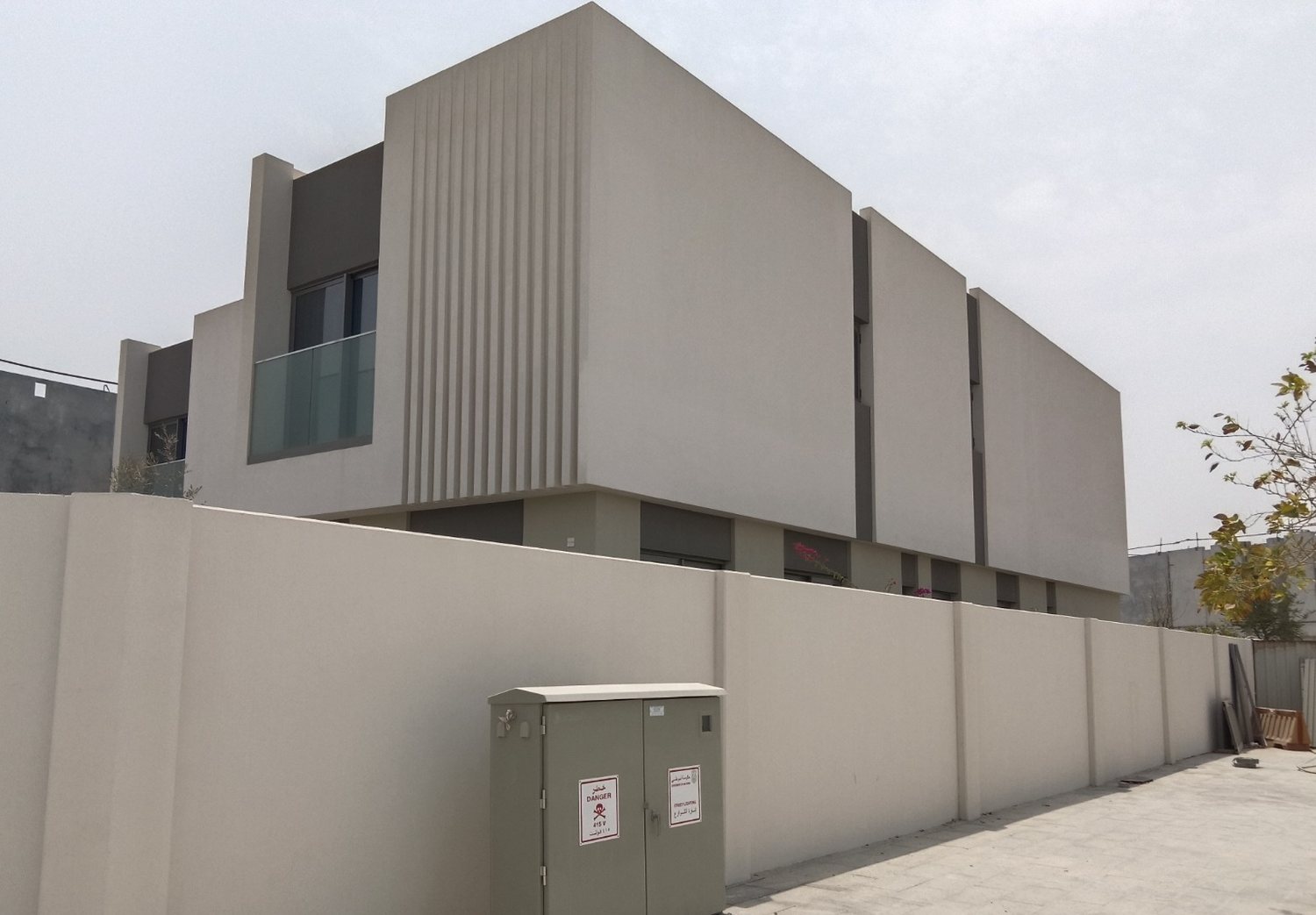
The boundary wall of a building is often the very first thing people notice. Apart from aesthetics, this wall is also what ensures the security as well as privacy of your indoor space.
Most property owners in the UAE choose either a traditional brick wall or modern precast boundary walls. The choice between these walls affects the construction costs and project timelines directly. These walls also differ in terms of their durability and maintenance requirements.
This quick guide gives you an insightful comparison between precast and traditional brick boundary walls. So stay with us till the end to find out which of these options will work best for your project in the UAE.
In this article
- What Are Precast Boundary Walls?
- What Are Traditional Brick Walls?
- Precast Boundary Walls vs Brick Walls: A Detailed Comparison Table
- Precast Boundary Walls vs Brick Walls: Key Differences
- Which Boundary Wall Is Better for Different UAE Projects?
What Are Precast Boundary Walls?
Precast boundary walls refer to factory-made or prefabricated concrete sections that you transport to the construction site for quick installation. These boundary walls use reinforced concrete as a raw material. This material undergoes careful curing off-site in factories, which results in greater strength and stability of the walls.
Precast concrete boundary walls offer faster installation along with lower workforce requirements. This reduces overall project costs without sacrificing durability.
These boundary walls find countless applications in residential communities, villas, commercial properties, construction site enclosures, warehouses, and large-scale infrastructure projects.
What Are Traditional Brick Walls?
Traditional brick walls consist of layers of bricks or concrete blocks that you join together with cement mortar. You have to place each of the bricks adjacent to and on top of one another by hand.
You can either leave brick walls as they are, or you can apply plaster or other external finishes to the walls to create customized patterns. Unlike precast retaining walls, you get more design flexibility with brick walls even after their installation.
The installation of these walls requires more manual labor. You need to work on cement preparation, brick laying, plastering, and painting separately in a sequence, which results in much longer project timelines.
Precast Boundary Walls vs Brick Walls: A Detailed Comparison Table
The choice between precast boundary walls and traditional brick walls is not so simple. There are several differences between the two that you must keep in mind to make a better choice.
Here is a comprehensive table that you can look at to decide better.
| Key Aspects | Precast Boundary Walls | Traditional Brick Boundary Walls |
| Construction Process | Off-site factory construction | On-site construction with bricks or blocks laid with mortar |
| Installation Timeline | Very short | Relatively slow or much longer |
| Costs | Depends on panel design, transport, and installation | Depends on materials and labor |
| Labor Requirements | Fewer on-site workers | More labor required on site |
| Durability | High | High when every construction phase proceeds without errors |
| Weather Resistance | Good resistance to harsh weather | Low resistance unless you apply suitable plastering or protection |
| Maintenance | Generally low | High maintenance since you need periodic plaster and paint repairs |
| On-Site Construction Waste | Generally lower on-site waste | More mortar and material waste due to more manual labor |
| Best For | Large projects and fast-track construction | Villas and customized residential projects |
Precast Boundary Walls vs Brick Walls: Key Differences
The choice between precast and traditional brick boundary walls comes down to your personal preferences or specific project requirements in terms of timeline, aesthetics, and more.
This section lists some key differences between precast boundary walls and traditional brick walls to help you choose a more suitable option for your property.
Construction Speed
The off-site manufacturing of precast villa decorative walls allows you to prepare more wall sections at the same time. It also allows you to prepare the wall foundations at the same time. After completion of the wall sections, you simply transport and install them on site. This results in fewer construction delays due to weather or site disruptions. As a result, the construction timelines become much shorter.
With traditional brick walls, you have to prepare the foundations, create the cement mortar, and then lay the bricks one by one. Each of these tasks requires more time and resources. This is what results in slower installation speed.
Structural Durability
Precast boundary walls feature dense and uniform surfaces made from reinforced concrete. These walls can easily withstand harsh weather or external impacts.
The formation of brick walls is not always perfect. Since you make these walls by hand, it is possible that you might add less mortar to some brick layers or fail to align the pieces properly. This poor workmanship makes brick walls prone to cracks.
Overall Costs
The precast boundary walls reduce overall construction costs to a great extent. The installation of these walls requires fewer laborers. There is also less on-site material handling involved. The faster assembly of these walls also reduces construction time to a great extent. These factors reduce the precast boundary wall cost significantly.
Brick walls, on the other hand, can be very expensive. You need more on-site labor to work long hours to prepare mortar and to lay every single brick. Since the installation of these walls is more resource-intensive, this is why they tend to cost more in the long run.
Maintenance Requirements
Another discerning feature of precast boundary walls is that they are very low-maintenance. If you install these walls properly and apply the right protective finishes, these walls can retain their appearance for years on end. You do not need to repair the cracks or do the painting often to keep precast walls in the best shape. These benefits of precast walls are what make them a wise long-term investment.
Maintenance is a big challenge with brick walls. These walls have less uniform surfaces, which makes them prone to damage. The mortar deteriorates, and the paint fades away after a short while. To solve these issues, you regularly need to repair the walls and fill the cracks. This makes traditional brick boundary walls more difficult to maintain.
Weather Resistance
The boundary wall of your property has to face extremely harsh weather. In the UAE, sunlight intensity can be very high. Prolonged exposure to heat or UV rays results in faster deterioration of traditional boundary walls. Poor brick quality and moisture penetration are also major issues with these walls.
The weather resistance of precast walls, on the other hand, is very high. These walls undergo careful production where every panel is exactly similar to the next. This consistent quality results in better weather resistance of these walls.
Workforce Requirements
The installation of precast boundary walls is relatively quick. The wall preparation happens in bulk in factories. This means you only need a smaller on-site workforce to prepare foundations and to position columns. The same workforce can then fit the wall panels with special tools.
For brick boundary wall construction, you need more labor. You need masons to prepare mortar and to lay bricks. You need more workers to apply plaster and to create specific finishes after the wall is complete. These processes increase the number of workers that you need to finish the job.
Design and Appearance
Precast boundary walls give you flexibility in terms of design or textures. But once the walls arrive at the site, it is not possible to make further modifications in design or appearance.
With brick walls, the flexibility in architectural design is greater. You can use different types of bricks or apply various decorative finishes to create more aesthetic boundary walls in this case.
Which Boundary Wall Is Better for Different UAE Projects?
The choice between precast concrete boundary walls and traditional brick boundary walls depends on your project specifications. Your personal preferences can also guide this decision.
Precast boundary walls work better in projects where timelines are shorter or the budget is tight. These walls are ideal for large industrial facilities and warehouses. You can also use these in commercial developments or infrastructure and utility projects.
Traditional brick walls are a better option in projects where you need more design freedom. These walls work best in residential villas, small private properties, custom-designed boundary walls, and projects that require decorative architectural details.
Conclusion
Most construction projects in the UAE either use brick walls or precast concrete boundary walls. Both of these walls have their merits, which is why you need to consider their key differences to make a better choice.
Precast boundary walls work better for large-scale projects with shorter timelines or limited budgets. The installation of these walls requires fewer laborers and less time.
The installation of traditional boundary walls is more resource-intensive. However, they give you greater design freedom. To decide better between these options, you need to consider the project size, budget, and timeline. This can help you choose a wall that meets the needs of your project in terms of aesthetics, security, and long-term durability.
Get in touch with us at Naran Precast Concrete Co. right now to order our top-quality precast boundary walls and other structural elements that promise exceptional durability, cost savings, and aesthetics at the same time.