

A dining table left outside in the UAE faces different conditions than one used indoors. Direct summer sun, humid coastal air, and blowing dust wear through most furniture materials well before a buyer expects it.
Precast concrete dining tables are cast specifically to handle these conditions. In this blog, we’ll see what precast concrete dining tables are, why they hold up better than standard outdoor furniture in UAE conditions, and how to choose the right one for a specific space.
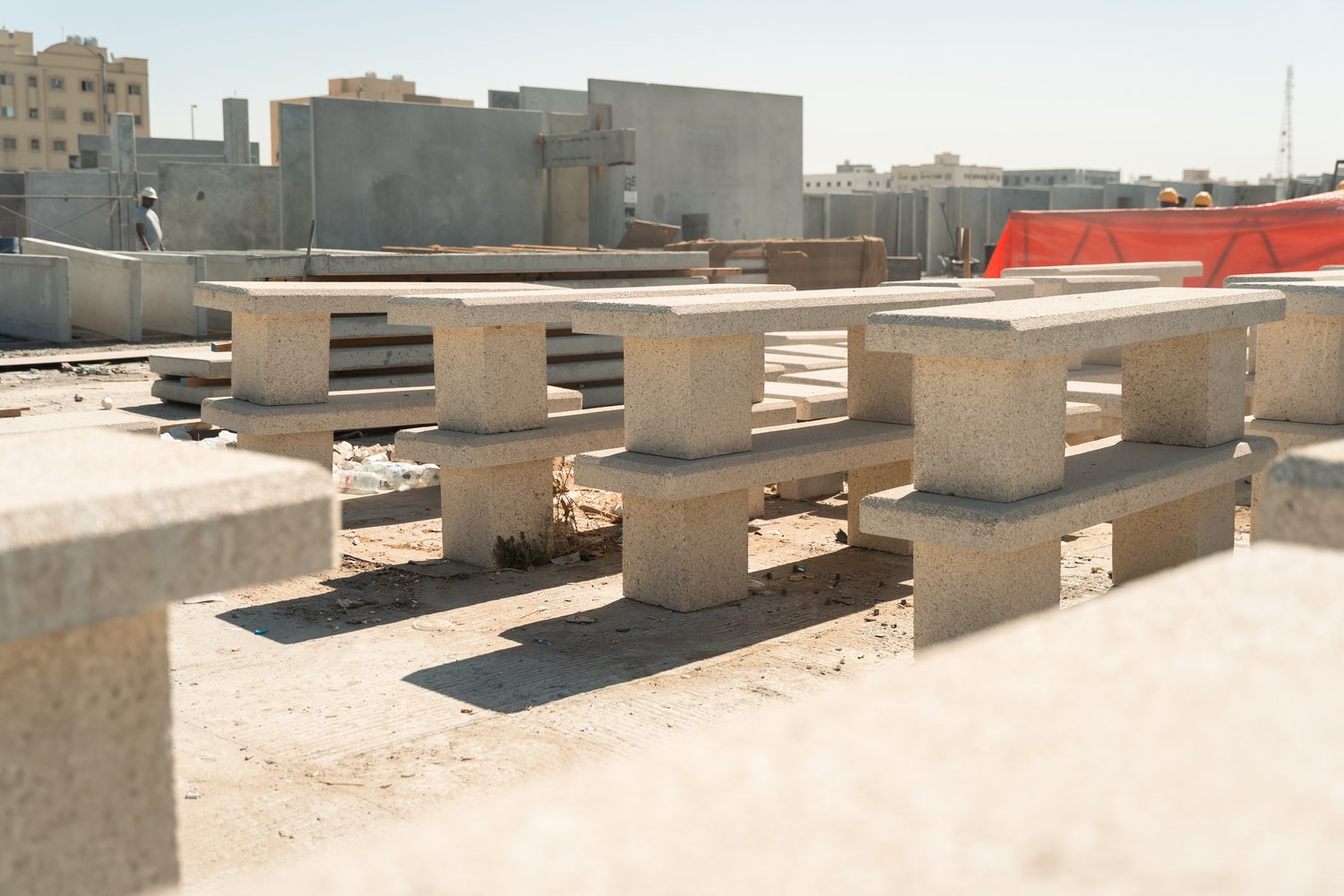
Key Takeaways
- Wood, plastic, and metal outdoor furniture all have a specific weakness in UAE conditions.
- Precast concrete dining tables cost more upfront but need far less replacement and repair.
- On villa terraces, hotels, and restaurants furnishing multiple tables, that difference adds up quickly.
- Choosing the right size, finish, and base matters as much as choosing the material.
Quick Comparison of Different Table Types
If you want to compare different table materials before you make a purchase, here’s a quick comparison table for your reference:
| Factor | Wood | Plastic/Resin | Metal | Precast Concrete |
| Heat resistance | Dries, cracks | Softens, fades | Surface heats up | Stable |
| Humidity/salt air | Warps | Holds up | Corrodes | Stable |
| UV exposure | Greys, splits | Brittle over time | Finish fades | Stable |
| Maintenance | Sealing, sanding | Low, but short-lived | Rustproofing | Occasional wipe-down |
| Typical lifespan | A few years | 1–3 years | A few years | Decades |
| Upfront cost | Low–moderate | Low | Moderate | Higher |
What Are Precast Concrete Dining Tables?
Precast concrete dining tables are concrete furniture elements that manufacturers cast and cure in factory-controlled settings rather than on site. Once cured, the finished table is delivered ready to install, with no on-site pouring or curing time required.
This off-site production is what gives every table the same strength and finish. It also opens up design options that on-site casting can’t match easily. The colour, texture, shape, and edge detail can all be set at the mould stage.
Key Features
- These tables use a dense, reinforced concrete mix with high compressive strength.
- Manufacturers can produce tops, bases, and finishes separately and pair them to suit the setting.
- Available finishes include polished, honed, and exposed-aggregate surfaces in a range of tones.
- Precast concrete dining tables can be custom-sized for a specific space rather than limited to stock dimensions.
- The material resists moisture, heat, and UV exposure without a protective coating.
- A well-made table needs only occasional cleaning to stay in good condition.
Why Precast Concrete Dining Tables Are Better for UAE Outdoors
Standard outdoor furniture struggles in UAE conditions for specific reasons. But precast concrete dining tables easily overcome them.
Handle Heat and Humidity Without Damage
Wood absorbs moisture and then dries out under sustained heat. This leads to warping and cracking over a season or two. Precast concrete dining tables don’t absorb water in the same way. So, they don’t swell, warp, or split when humidity rises or temperatures spike.
Resist UV and Salt Air
Plastic furniture doesn’t hold up well under sustained sun exposure. Research on certain polymers showed that it lost about 81% of its fracture strain after roughly four years of outdoor UV exposure. This is the reason plastic dining sets turn brittle and crack well before a decade is up.
Metal furniture also doesn’t work near the coasts. That’s because the salt-laden air from the sea simply attacks steel faster, making it corrode.
Precast concrete dining tables aren’t affected by either condition. UV doesn’t break the material down, and there’s no metal surface for salt air to corrode.
Need Very Little Maintenance
Wood needs sealing and sanding, and metal needs rustproofing, on a recurring schedule. Precast concrete dining tables mostly need a wipe-down. There’s no seasonal treatment to plan for or budget around.
Stay Stable in Windy Conditions
Precast concrete dining tables are heavy by design, which keeps them in place during strong seasonal winds. Lighter furniture can shift or tip in the same conditions, which is a bigger concern in open courtyards, rooftops, and coastal locations.
Last for Decades, Not Seasons
A precast concrete dining table typically outlasts wood, plastic, and metal outdoor furniture by a wide margin. That longer lifespan is what offsets the higher upfront cost over time, especially for venues furnishing multiple tables.
How to Choose the Right Precast Concrete Dining Tables for Outdoor Spaces
Material durability is only part of the decision. A few other factors affect whether a precast concrete dining table works well for a given space.
- Size and shape: Start by measuring the space, including room for chairs and for people to move around the table. Standard sizes don’t always fit. Ask the manufacturer about custom dimensions before settling on anything off the shelf.
- Finish and colour: Match the finish to the setting. A smooth, light finish suits a modern terrace, while a textured, darker finish suits a more natural or garden setting.
- Base design and weight: In exposed or windy spots, a heavier base keeps the table from shifting. But the same isn’t true for a sheltered courtyard or covered patio. A lighter base works fine, and it’s also easier to move around when needed.
- Use case: Restaurants and hotel terraces see daily use, so durability and low maintenance come first. A table for a home garden used a few times a month has more room to prioritise finish and design instead.
- Matching pieces: Many outdoor spaces pair a dining table with other decorative and furniture pieces, such as matching outdoor benches or planters, for a consistent look and the same low-maintenance benefit throughout the space.
- Supplier and installation support: Confirm that the manufacturer can handle delivery and placement, since these tables are heavy and not easy to move once installed. Working with a manufacturer that also offers design input helps match the table to the space before it’s produced.
Conclusion
Precast concrete dining tables cost more to bring in than wood, plastic, or metal outdoor furniture. But they hold up to UAE heat, humidity, UV exposure, and wind in a way those materials don’t.
Choosing the right size, finish, and base makes the difference between a table that simply survives outdoors and one that suits the space it’s in.
Visit us at Naran Precast Concrete Co. today to order precast concrete dining tables built for your outdoor settings. They are designed to your specifications, for residential, commercial, and hospitality projects across the Emirates.