The choice between precast shoring panels or traditional sheet pilings plays a big role in every project where you need durable excavation support and sturdy earth retention systems.
Both of these systems are pretty effective when it comes to soil retention or the protection of deep excavation sites. However, they do not cost the same, which is due to differences in their materials, installation requirements, and long-term value.
This blog gives you a detailed cost comparison between these two excavation protection solutions. This information can help you pick a system that not only increases worker safety but also ensures high long-term cost savings.
- What are Precast Shoring Panels?
- What is Sheet Piling?
- Precast Shoring Panels vs Sheet Piling: A Detailed Cost Comparison
- What is a More Cost-Effective Option?
What are Precast Shoring Panels?
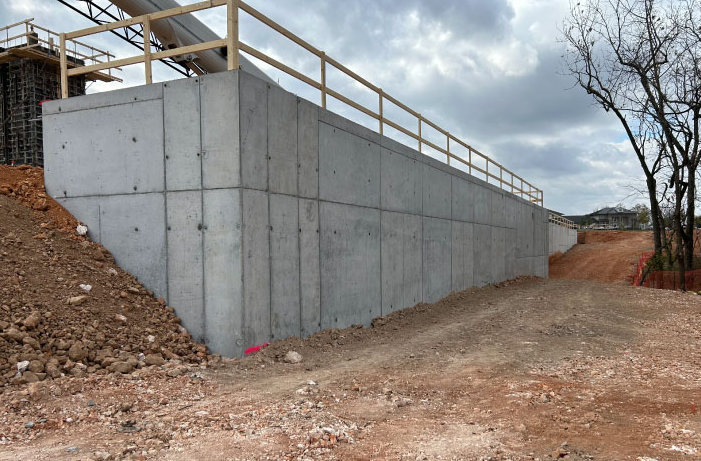
These are pre-fabricated or factory-made precast concrete products that you can simply transport to the site for installation. In this case, precast concrete panels go between soldier piles or other structural support systems. This creates a strong boundary between the site and the surrounding soil.
Research reveals that prefabricated shoring components can achieve high load-carrying capacities comparable to conventional systems while reducing assembly complexity at the same time. Studies also show that precast shoring panels have about 2.7% higher load-bearing capacity than the comparable cast-in-place alternatives.
These shoring panels find uses in excavation support systems for utility projects, transportation infrastructure, or temporary soil retaining applications.
The off-site manufacturing of these shoring panels leads to greater surface strength. These concrete elements possess exceptional surface uniformity, which makes them a more reliable option in deep excavation applications.
What is Sheet Piling?
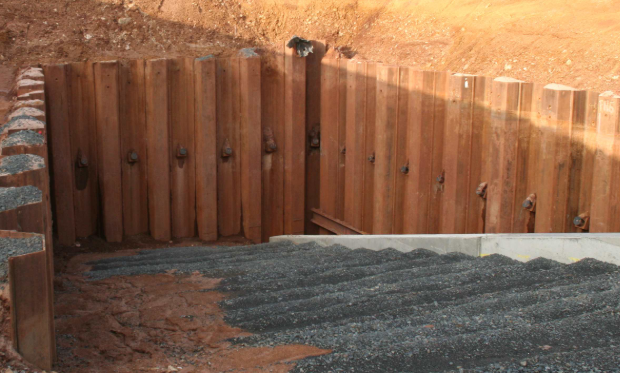
Sheet piling refers to a system of interlocking steel, vinyl, composite, or concrete sheets that you drive into the ground to create a retaining wall. Sheet pilings create continuous interlocking walls that offer zero water or sand ingress. You can use sheet pilings for temporary or permanent deep excavation projects, flood defense systems, cofferdams, and seawalls.
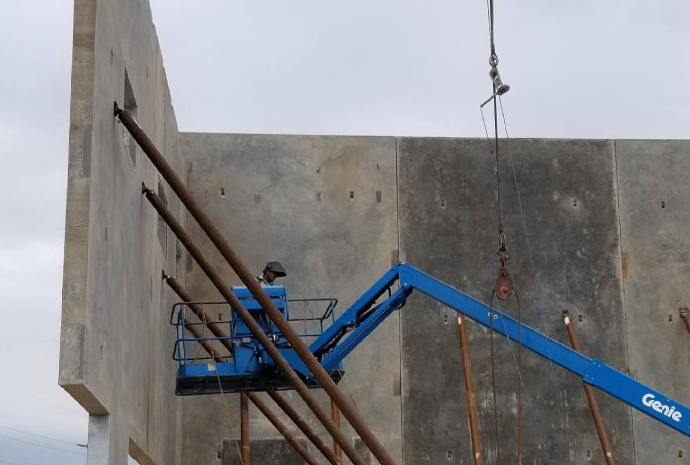
Precast Shoring Panels vs Sheet Piling: A Detailed Cost Comparison
The overall cost of precast shoring panels and sheet pilings depends on several factors. This section lists some important ones to help you make a better choice.
1. Initial Material Costs
The controlled construction of precast concrete shoring panels leads to greater material efficiency and waste reduction. It also ensures better quality control, which means the risks of panel breakage are very low. This saves you material costs.
The price of sheet pilings can fluctuate as they can use different materials like steel or vinyl with interlocking mechanisms. This makes precast shoring panels a better option for standard excavation and infrastructure projects where the budget is tight.
2. Installation Costs
Installation of precast shoring panels involves excavation, placement of soldier piles, lifting panels into position, and securing support systems. In this case, there is no need to do more site work as the panels arrive in ready-to-use form. This reduces labor hours and limits on-site construction activity, which saves you costs.
To install sheet pilings, you need specialized pile-driving equipment and skilled operators. You also need resources for noise and vibration monitoring. In cases where the soil is extra hard, you have to perform pre-drilling. These processes are more time-consuming and labor-intensive, which increases the costs.
3. Equipment Requirements
The equipment you use for the installation of these systems also affects the costs. For shoring panels, you can use basic support equipment along with standard cranes or excavators. This equipment is easily available.
To install sheet pilings, you need vibratory hammers, impact hammers, specialized driving rigs, and heavy lifting equipment. This machinery is more expensive to rent.
Thus, with precast panels, the equipment expenses reduce significantly.
4. Labor Efficiency
You do not need on-site workers to pour shoring panels. These precast concrete structural elements come in prefabricated form. You can simply assemble them on the site, and you are good to go. The simplified construction with the help of a very small construction crew is what makes precast shoring panels more cost-effective.
Sheet piling installation demands more highly skilled workers. You need experts in pile-driving as well as alignment. The preparation of the site and the installation of sheet piling both need large crews, which adds more to the costs.
5. Durability and Long-Term Maintenance
Precast shoring panels are highly durable. The uniform pouring and curing of these elements increases their impact resistance. These panels can last for years with minimal maintenance since the reinforced concrete doesn’t rust or corrode.
Metal-based sheet piling needs protective coatings, corrosion monitoring, and regular maintenance. These pilings can easily crack if the water or sand pressure suddenly increases.
This is why, for permanent applications, you need shoring panels as they offer lower overall lifecycle costs.
What is a More Cost-Effective Option?
In most excavation projects for urban infrastructure, utility, and transportation systems, long-term cost-saving is the biggest concern. In all of these projects, precast concrete shoring panels are a better choice as they offer quicker installation and lower equipment expenses along with greater labor efficiency.
High durability and low maintenance requirements further make precast shoring panels a better option as compared with sheet pilings that need regular care. Sheet piling is more suitable for specialized applications in maritime locations where you need more water control.
But precast concrete shoring panels can work well in all projects, even with difficult site conditions, excavation depths, groundwater levels, and environmental constraints. This is what makes them a more reliable option in modern excavation projects.
Conclusion
Precast shoring panels are a more cost-effective solution in modern construction projects and for very good reasons. These panels provide exceptional soil and water retention even when the budget is tight.
Unlike sheet pilings that require more on-site work, special tools, and skilled labor, precast shoring panels offer much quicker installation with better quality control.
This means the overall lifecycle costs of precast shoring panels are much lower. However, you still need to consider your specific project requirements to make sure you pick a soil or water retention solution that delivers the best value for your money.
Visit us at Naran Precast Concrete Co. today to check out our wide range of customized, precast concrete structural elements and other construction solutions that guarantee long-term strength and durability in all applications.
FAQs
What makes precast shoring panels more cost-effective?
In most modern construction projects with tight timeliness, greater durability requirements, and tight budgets, precast shoring panels are a much better option. These panels offer several benefits, such as quicker installation, fewer labor headcounts, better durability, minimal maintenance, and greater worker safety. This reduces overall project costs.
What is the main difference between sheet piling and precast shoring panels?
Shoring refers to a broad category of mechanical or structural systems that you install inside an excavated site to prevent soil or water ingress. Sheet piling is a specific type of shoring where you use interlocking vinyl or steel sheets and drive them into the ground to create a watertight barrier.
How long does a sheet piling last?
A properly installed sheet piling can easily last you 40-75 years if you pay attention to its regular maintenance. In some cases, it can even last beyond 100 years if you choose the material and the coating with care.
Can you use precast shoring panels or deep excavation sites?
Yes. You can design these for very deep excavation projects where you need greater soil stability. Just make sure to combine these with quality support systems like soldier piles or tiebacks to ensure long-term structural stability.